Report links Batuk soldiers to rape, abuse and impunity in Laikipia and Samburu

A Kenyan parliamentary committee has linked British Army personnel in Laikipia and Samburu to sexual violence, UXO deaths, injuries and environmental damage, and urged legal reforms to end what it calls a culture of impunity.
A National Assembly Committee has uncovered disturbing instances of sexual assault, violent conduct and mishandling of explosives by British Army personnel in Kenya.
The Defence, Intelligence and Foreign Relations Committee revealed multiple allegations of rape, sexual abuse, environmental damage and negligence linked to the British Army Training Unit Kenya (Batuk) during operations in Laikipia and Samburu counties.
More To Read
- High Court sets December 16 mention in Agnes Wanjiru murder case as UK confirms suspect in custody
- Former British soldier facing extradition over Agnes Wanjiru murder denies knowing victim
- Ending violence against women ‘a matter of dignity, equality and human rights’
- Ex-British soldier arrested in UK over Agnes Wanjiru murder
- BATUK: How 1964 pact shaped Kenya’s military partnership with UK
- UK reaffirms support for justice in Agnes Wanjiru case in response to Kenyan inquiry
The inquiry, prompted by complaints from local communities, detailed incidents of injuries and deaths caused by unexploded ordnance (UXOs). One of the most shocking cases involved Robert Swara Seuri, a civilian employee at the Ole-Naishu Range, who died after accidentally taking home an unexploded device from a Batuk training site.
“The device detonated with devastating force... The blast was so powerful that fragments of his flesh were lodged in the ceiling, and his body was mutilated beyond recognition,” reads the report.
Seuri’s grandmother was also severely injured.
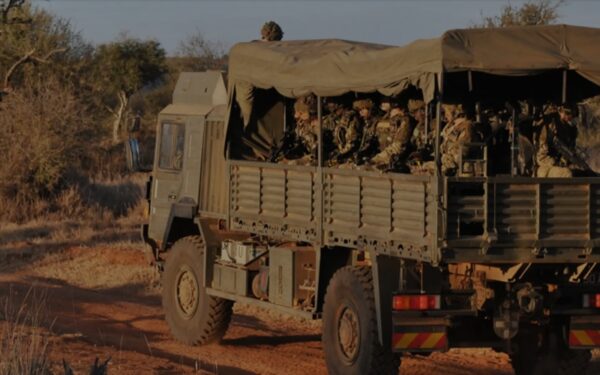 British soldiers in a truck at an outpost. BATUK is a permanent training support unit based mainly in Nanyuki. (Photo: British Army)
In another incident, a child, Lisoka Lesasuyan, lost both arms and an eye after coming into contact with another UXO. Despite a court awarding him Sh10 million in compensation, Batuk reportedly offered a settlement claiming “50 per cent responsibility”.
The Committee noted that “new evidence now indicates that Lisoka, who requires prosthetic limbs for life, should have received a higher compensation amount.”
The report also details public indecency, including soldiers exposing themselves and repeated accounts of alcohol-fueled violence and sexual misconduct in towns near training grounds.
“Witnesses described frequent altercations involving Batuk soldiers in bars, social venues and town centres, often involving intoxication, disorderly conduct and in some cases violent or sexually aggressive behaviour,” reads the report.
It adds that “many submissions revealed that Batuk has on diverse occasions failed to comply with court orders on compensation arising from accidents and environmental degradation linked to its activities.”
High-profile incidents include the 2012 murder of Agnes Wanjiru and the shooting of herder Tilam Leresh by a Batuk sergeant.
 Agnes Wanjiru, the young Kenyan mother whose 2012 murder allegedly involved a British soldier, has become a powerful symbol in Kenya’s long fight for justice. (Photo: Human Rights Watch)
The report highlights historical sexual violence cases documented by the Truth, Justice and Reconciliation Commission (TJRC), including a 1997 incident in Archer’s Post where “30 women were gang-raped at knife-point, some inside their own manyattas”.
Environmental concerns were also cited, including the 2021 Lolldaiga Hills fire, which destroyed over 12,000 acres, as well as reports of respiratory problems, miscarriages and livestock deaths caused by toxic fumes and leftover military waste.
Other Topics To Read
- News
- Headlines
- National
- BATUK
- Defence
- Intelligence and Foreign Relations Committee
- sexual violence
- British Army Training Unit Kenya
- kenya parliament
- Agnes Wanjiru
- unexploded ordnance
- environmental damage
- Lolldaiga Hills fire
- military accountability
- Report links Batuk soldiers to rape
- abuse and impunity in Laikipia and Samburu
Despite the allegations, no Batuk personnel have faced prosecution in Kenya for serious crimes committed on Kenyan soil. Alleged offenders are often repatriated or internally disciplined by the UK military, creating what the Committee described as a “culture of impunity”.
The UK High Commission issued a statement expressing regret that its input was not included in the report’s conclusions, but affirmed its willingness to investigate allegations under its jurisdiction.
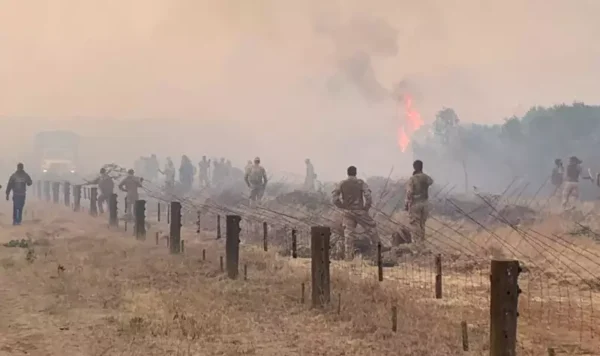 Batuk soldiers and firefighters along Lolldaiga’s perimeter during the 2021 fire. (Photo: MOD)
“Where new allegations have come to light in the Committee’s report, we stand ready to investigate those under our jurisdiction fully once evidence is provided. The UK highly values its defence relationship with Kenya, which delivers a broad programme of cooperation in training, education and capability development to counter shared security threats together,” the Commission said.
The Committee recommended that the Ministry of Defence, in consultation with the Attorney General, amend the Kenya Defence Forces Act to include a visiting forces code of conduct, enforce zero-tolerance provisions for gender-based violence, establish environmental obligations and strengthen civilian oversight mechanisms.
It also called for negotiations with the UK government to hold Batuk soldiers accountable for child support obligations and to cooperate fully with extradition requests for suspects involved in murders and serious assaults.
Top Stories Today